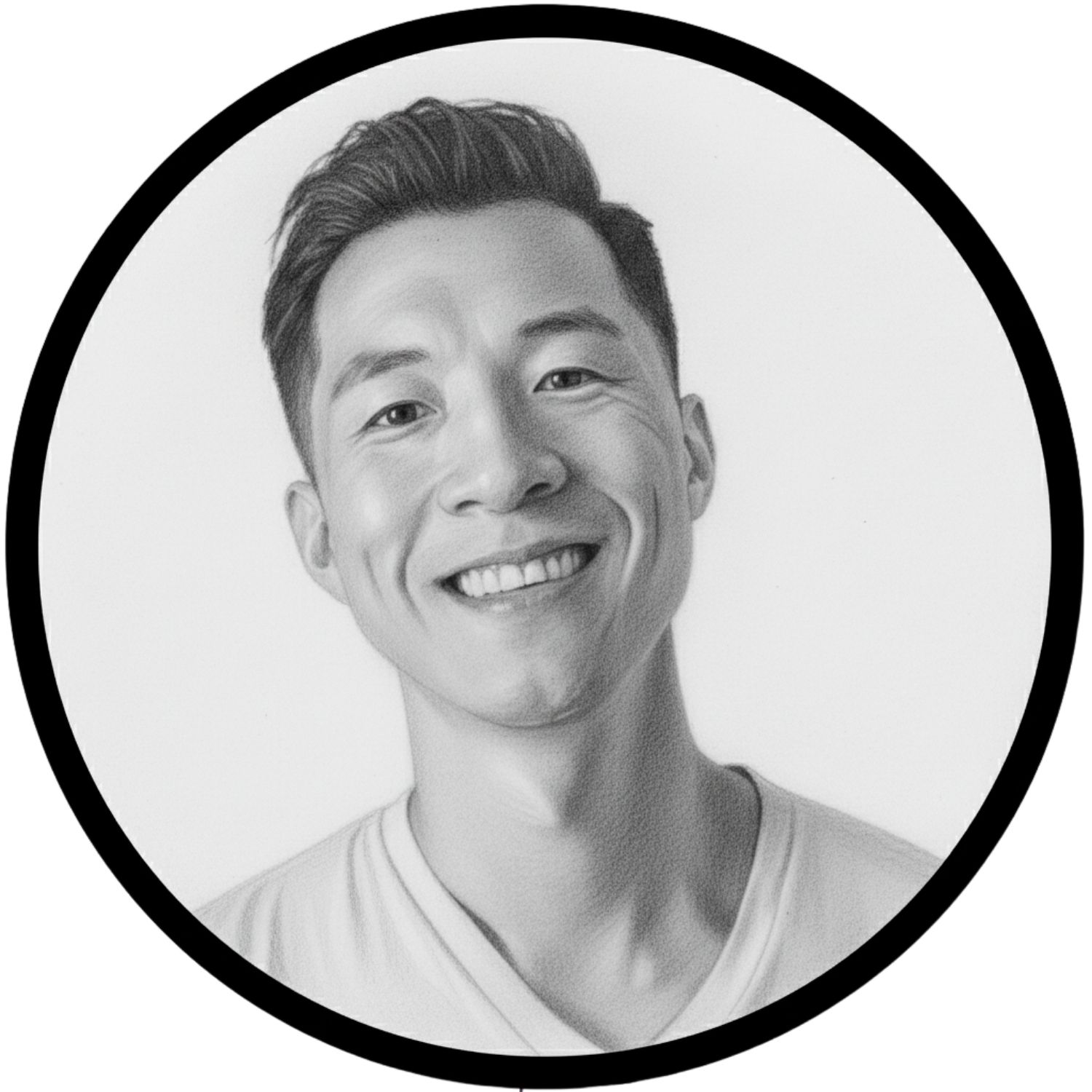
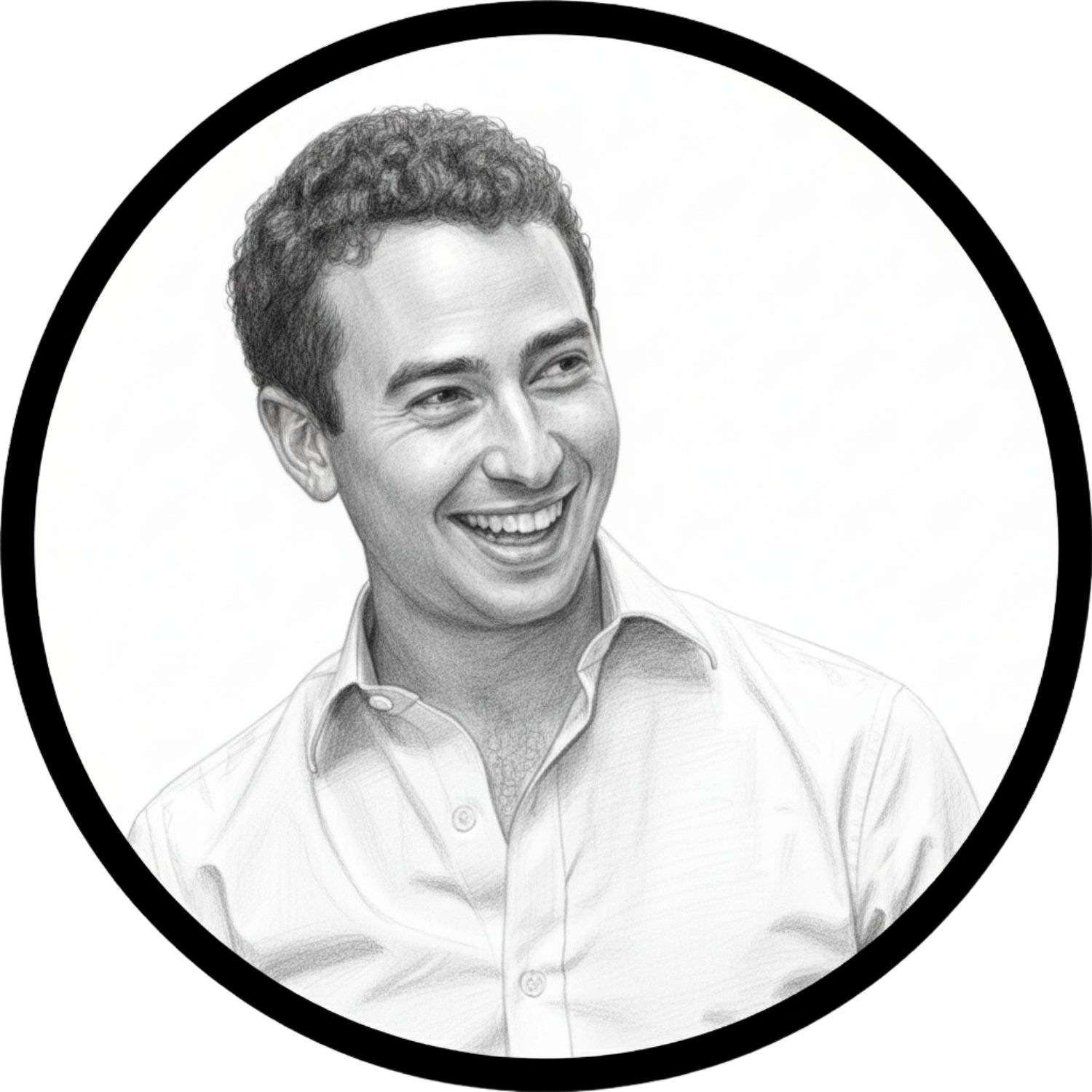
Member Spotlight: Jack Gardner
Founder and CEO of Kickoff

Who are you and what are you building?
“I'm Jack. I'm the founder and CEO of Kickoff. We’re the first to offer personal training covered by health insurance. I really am a fitness-obsessed and adventure-obsessed person.”
Have you always been fitness and adventure-obsessed?
“I think so, yeah. Part of the entrepreneurial journey is finding something that you don't find to be work and making that your obsession. So, you know, before Kickoff, I was already always super into optimizing nutrition and exercise. And so it's a very natural fit to start the company.”
Did you play sports or were you competitive growing up?
“Yeah, yeah, I was very into tennis, track, cross country, played all the sports. I'd say best at running. My hand-eye coordination is not incredible, but I'm always very into all of it. And that becomes harder as you become an adult. But I've worked really hard to keep active and I just feel so much better.
I think our clients find the same thing, just are so much happier, feel so much better when they're moving and active than sedentary. We're behind these computers a lot, so it's important. My back and neck would tell you that.”
How did that love of sports and competition lead to Kickoff?
“We are a personal training platform. We're the first covered by health insurance. And the root of it comes from a lot of personal interest in this space, but also a lot of family history of medical issues, preventable disease.
Unfortunately, [there were] a lot of really scary things early in my life that kind of made me really focus on how do we help people take care of themselves and build good habits that keep them healthy for longer. It's a lot of a lot of stroke, a lot of diabetes, a lot of related illnesses in my family. So I've been close to my heart for a long time.”
Do you mind sharing one of those scary situations?
“There were a lot of cases growing up, like my grandmother had a stroke when I was very young. Like all of my grandparents developed diabetes and had to deal with that, and I saw the rough side of that. Most of the male members of my family have not lived to 60, and I really want to help people change that and get on a better path.
So the idea is basically how can we help people build better habits? I got really into behavioral psychology and behavioral economics, and that's what I studied in college. Why do people make illogical decisions? Because we sometimes like to act like we're very logical and make decisions based on data and goals, and that's not what actually happens. We make decisions most of the time based on our reptilian brain that's evolved over years, over millennia, to guide us in how to survive in a very different context than we live in today.
And so we overeat, we eat as much as we possibly can of the fattiest possible foods because our ancestors needed that to survive. And we move as little as possible to conserve as much energy as possible. And that's not the world we live in, and it causes all sorts of problems in this world. And so it's very deeply and evolutionarily ingrained impulses that we have to overcome. And the idea behind Kickoff came out of the fact that I saw a way to combine AI and automation and a human coach to bring together something that was better than the sum of the two parts.
Social accountability, having someone be aware of your actions and want to be consistent to them is an equally deeply evolutionarily ingrained impulse in us. And so it can overpower those things that kind of get us off track.
And that's why you don't see a lot of billionaires that have these problems. Because they have a cook, a California personal trainer, a New York personal trainer, a scheduler, someone whose job is just to make sure they take their pills and they do their workouts and they do everything. And so they don't have this problem. And so the idea behind Kickoff was like how do we use technology to bring that kind of support to working class, middle class, everyday people. So you're trying to provide the health and wellness support that billionaires get to everyone else, all the non-billionaires.”
Is that where Kickoff started? I know that's where you are today, but is that where you really started?
“That's always been the case, yes. [Increasing access to preventative health] has always been the mission from day one.
All in [it’s been] eight years. I'd say that overlapped [with] my last job. There's definitely a ramp-up period. But I got certified as a trainer to figure this out as part of the process exactly eight years ago now. So that's when it really began.”
Was it just by yourself? Like it was just a company of one at that point?
“So it was me as the only really full-time person at first. But I had a great group of part-time folks around who were supporting and helping building out the first web app, helping me build out programming, serving as my guinea pig clients for free, you know, all of that kind of stuff.”
So you went through your MBA, you did your behavioral finance studies, and then you told your parents that you're going to become a personal trainer. What was their reaction to that?
“Well, not exactly. I went to consulting, worked with big software companies in Silicon Valley and then went to a seed stage YC company and was the first business person there for two years. And then I got certified as a personal trainer [to start iterating on what would become Kickoff].
I never actually trained anyone in a conventional sense, but it gave me the credibility to start testing the MVP of Kickoff and actually gave a lot of context in terms of how we should structure the workout program.”
How did you land your first customers? What did the original MVP look like?
“Well first, very first customers were just colleagues and friends. And the MVP of MVPs was me literally training someone in a gym. But that lasted about two weeks just to kind of get in the idea of how you create value for someone in that context and what the actual problems are.
This was a time when there was no remote training. In late 2017, early 2018, there was no remote training whatsoever. The idea that was laughed at, thought of as like, you can't possibly do that. No one will actually feel any accountability. And so I wanted to understand the accountability in person and think about how do we replicate that remotely.
And so quickly moved from in-person to training folks via video call and text message and tried lots of different things to figure out how do we replicate the accountability people feel so they actually change their nutrition and change their workout performance and adherence. And it was a very test-and-learn approach.”
So it sounds like the key insight is really realizing that the accountability drives behavioral change.
“Yeah, yeah. I mean, I knew that before anything started. The question was how to provide that accountability. In a way that really keeps people on track. Digitally and cheaply, and like, ultra cheaply. Because it's insanely expensive to have a human sit there and watch you bench press. Especially if they're any good. We kind of determined that through a lot of trial and error. Basically [it] comes down to having a lot of touch points. So talking to, basically texting with our clients multiple times a day, every day.
Like for me, I still have about 20 clients of my own on the platform. [It takes] maybe five minutes a day. Like it would take me almost no time because I'm really just overseeing what is the plan, what is it looking like, oh, that needs to change, congratulate them on that, very, very fast. Now, I am the ultimate power user, but [it’s] still, very, very fast. But not zero, still the human in the loop, and that's really critical for driving behavior change.”
Looking back, what have been the biggest challenges? What do you wish you had known when you started?
“I thought it would be much faster. It's taken eight years. I thought this would be eight months. It's taken eight years. We're still going. But it's working. Insurance has just been incredibly slow. We had to build up seven years of proof points, seven years of data showing that we meaningfully improve client health before they would flip the bill.
It's one of those things that you hear founders a lot of times say, like ‘if I had known how hard this was, maybe I wouldn't have done it.’ I'm glad I didn't know how hard it was, if you told me it'd be eight years or like in our case, seven and a half years in order to get insurance coverage, I would have been like, that's not possible.”
What’s been the biggest surprise or lesson along the way?
“I think that one thing that comes to mind is that the most important thing for helping people change their lives for the better is not the quality of the content, it's not the data, it's not the quality of the app or the UX. What matters most for clients is feeling successful.
So in our context, if a client is super successful and is feeling like they're making progress no matter how small they are going to commit more, invest more, and continue to make progress. And if they feel like a failure, they're going to immediately quit and write negative reviews and be really, really disappointed and unhappy. So we have to find early concrete real wins. They can smell a fake win a mile away.
We have to actually get them wins early and often or they're immediately going to give up. And people give up way too often. This is also true in the entrepreneurial world, right? People give up way too often. And I think there's some amounts of like, you need to have a glimmer of hope as an entrepreneur as well. But it's definitely true for people's wellness journeys. They need to feel like they're progressing and that it's like, ‘how we can make that happen as quickly as possible’ is really key.”
Can you give me an example of an early real win that has really unlocked conversion or retention for you, and an example of a fake win that you tried and customers could sniff it out?
“Yeah, yeah. So big win is just logging one's nutrition for a day. Not actually changing it, but just logging it in our app and just having a full accounting of what one ate. And oftentimes it's the first time that clients have ever done that or they've never done it concretely, like comprehensively.
It's pretty interesting to take a look at your full day. You can't just log two things. You've got to do the full day so you can see where you're doing well and where you're not doing so well. You get a lot of insight out of that, a lot of value. Clients normally immediately see what they need to do without any feedback. Then, of course, we come in and give them more feedback. That's super helpful and the clients feel like they've accomplished something. And they haven't had to change what they're eating. They haven't had to say no to their favorite food. They haven't had to even go do a hard workout yet, but that's like a really good first win. We often try and get clients to do that even before their first call with the coach, just so they can have a baseline, they've got the ball rolling, and it's normally very obvious for the coach and client to then talk about how we're going to make that 5% better. Let's think about replacing the burger with a salad or the fries with a salad or whatever it is.
[What’s not worked,] I think that there's a lot of tendency in our world for gamification. And I think we've tried to gamify too much. We've tried points. You earn some points by doing your workouts. That appeals to a small number of people. There's a certain gamer type that that really appeals to. And it backfires with others because if they're not absolutely crushing it, again, they don't feel successful. It maybe works as long as they ace it, but the moment they don't ace it, it doesn't.”
What’s a habit or ritual that keeps you sane?
“Yeah, yeah. I do exercise as much as possible and that helps me a lot.
It's every day and living in New York City, I love the fact that we can bike almost everywhere, so I do a lot of biking, I always have my helmet like at all times. The only time I don't bike is basically when it's pouring down rain or snowing, otherwise it doesn't matter how cold, it's just a better way to get around and a good way to get some additional exercise.
But you know, that's still kind of work. Any kind of exercise is still a little bit in the work area. And I still love it, but luckily the startup hasn't ruined exercise for me. But it's still a little bit close to work.
Also, spending a lot of time traveling, trying, exploring new cultures. I’m really into adventure sports of all types, anything different and novel. And that's one great thing about being a founder is you can structure your in-office culture to enable workcations and do things. And so we're often working a full day in a different time zone and then having an evening to go explore or vice versa. So really into traveling and just meeting new people and exploring new cultures.”
Why are you in NYC?
“I'm in New York City because of the melting pot. Because every day I learn something new about some different group of people or culture.
Like for me, the negatives of New York hit hard and fast immediately. Everything's small. There's trash. There's mental illness. Everything's insanely expensive… obvious things, they hit immediate and you see them instantly. The value [of NYC] is subtle and incredible and it comes with time. So just being exposed to every different, you know, culture from around the world, being exposed to every different industry, every different art style, I think the diversity of the human experience that you can get here is just unbeatable. So that's why I'm here.
And I think it also is related to the high energy. So everywhere else feels a little bit more relaxing or boring depending on what you're in the mood for at the moment.”
What’s your biggest ask right now? How can others help?
Well, first of all, we’re hiring a BizOps Manager and Sr Software Engineer in NYC right now, so reach out if you’re a fit for one of those roles!
“Otherwise, we're offering the first opportunity to get personal training covered by health insurance for almost everyone. For 95% of our clients it's $0.
The rest have a very small copay. So we just need to get that awareness out about that. It's a no-brainer once people know about it. Our biggest challenge right now is people don't believe it. They literally think it's too good to be true. It's like a free lunch. It sounds too good to be true. But it's not when you think about what your insurance is going to pay for you if you're unhealthy, which is just mind-boggling millions of dollars. So it's a small investment for them to keep you healthy.
So yeah, the thing I'm looking for now is just introductions to folks who are interested in sharing this opportunity with their employees or with their patients. We're getting a lot of inbounds and it's gotten my attention from medical practices who want to be able to send their patients somewhere that they can get healthy and avoid bigger complications. So looking for introductions and ways to get the word out to people who would value getting in shape for free.”
If this sounds like you or someone you know, reach out at jack@trainwithkickoff.com or via LinkedIn.
Jack Gardner is Founder and CEO of Kickoff, the first and only platform offering personal training covered by health insurance. Kickoff is on a mission to increase access to preventative health. All of our coaches are dual-certified as Registered Dietitians and Certified Personal Trainers focused on driving better nutrition and exercise habits for clients. Kickoff was founded in 2019 and Jack joined NYCFC this summer after being hooked by the NYCFC ski trip in March.